

A place isn’t beautiful because you visited. It’s beautiful because someone stayed.
Quick Catch-Up From Last Week
- From the JustDraft about Hermes AI Agent Use cases?
- Read our LensLetter Archive why photographer should try abstract photography?
There’s a village in northern Norway with fewer than 25 permanent residents. Last year, 90,000 tourists visited.
Ninety thousand.
Read that ratio again. Over 4,000 visitors for every single person who actually lives there. The fishing nets are still strung across the harbour. The red timber warehouses still reflect on the water. The boardwalks are still undeniably scenic. But the people who built all of this? Most of them are gone.
A good photograph should carry beauty, but a responsible one should carry respect.
This is the paradox no travel brochure ever mentions.
We tend to think of overtourism as a numbers problem. Too many people, wrong place. Sort the ratios and everything settles. But what’s actually happening in some of the world’s most photographed destinations is something slower and far more damaging the hollowing out of the very thing that made a place worth visiting.
It’s not about crowds alone. It’s about what gets left behind when the crowds go home.
In that same Norwegian archipelago, a contrast between two villages tells you everything. One has become what its own residents describe as a “living museum” tourist accommodation, a heritage centre, a lovely boardwalk, and a permanent winter population small enough to share a dinner table. The fishing industry migrated to busier centres years ago. Tourism stepped in to fill the gap. Without it, the village probably wouldn’t exist at all.
A few hours away along the coast, a second village tells a different story. Late at night, locals are out painting their front doors. Teenagers are under floodlights playing football on a pitch perched improbably above the sea. Fishermen are checking nets at midnight because, as one puts it with a grin, “the fish bite better then.” This is a community that’s still breathing, where tourism funds part of the economy without replacing it.
The best travellers don’t collect places. They learn how to move through them gently.
That second village is what the first one used to be.
The same story is playing out 8,000 miles away in one of the oldest cities in the world.
A historic Japanese city welcomed nearly 11 million visitors in 2024 alone a record and same story in 2025 as well. And for the people who actually live there, the mood is far from celebratory. Researchers documenting the impact found residents experiencing genuine emotional distress detachment from their own neighbourhoods, a creeping sense that their city was no longer quite theirs. Tourists had been pursuing local performers through narrow alleyways, ignoring private property signs, pushing into spaces that weren’t theirs in search of the perfect frame.
The response? Parts of the most famous district were simply closed to visitors. Not to protect tourists from each other. To protect residents from tourists.
The city is now introducing one of the highest accommodation taxes in the country because presence has a cost that nobody wanted to account for until it became impossible to ignore. That money goes toward fixing the infrastructure that millions of visitors have been quietly straining for years.
A tax. On simply turning up. Because arriving en masse, without thought, isn’t neutral.
Some landscapes ask for a camera. Others first ask for patience.
Then there’s the Greek island that everyone photographs.
The numbers here stretch past the absurd. Around 15,500 people call it home year-round. In recent years, roughly 3.4 million tourists have visited annually. On a single peak summer day, as many as 17,000 cruise passengers arrive more than the island’s entire population, in a single afternoon.
Locals described 2024 as “the worst season ever.”
The island’s mayor has been calling for a formal designation as a “saturated zone” a classification that would allow development and visitor numbers to be capped. That call dates back over a decade. The central government ignored it. The construction kept coming. The cruise ships kept coming.
This year, a daily limit of 8,000 cruise passengers was finally enforced alongside a €20 per-passenger fee. The island got its first real breathing room in years aided, ironically, by a series of early-year earthquakes that frightened visitors away temporarily.
The 3.4 million annual visitors produce a ratio of approximately 220 tourists for every resident per year a figure that, by the late 2010s, had already pushed the island beyond the measurable limits of standard overtourism indicators. It took a geological event to give residents a moment of quiet.
The best light you’ll ever find is in a place nobody’s rushed to ruin yet.
What does any of this have to do with photography?
More than most of us want to acknowledge.
We are extraordinarily good at making places look desirable. A well-composed shot, the right light, the right moment and suddenly a quiet fishing village has 90,000 visitors. A geisha district becomes a destination for photographers hunting a specific frame. An island’s blue-domed skyline becomes the most shared image of an entire country.
The image precedes the crowd. The crowd follows the image.
That doesn’t mean we stop shooting. It means we carry a responsibility most of us don’t spend much time thinking about. It means asking whether the photograph we’re about to post does more good or more harm for the place in front of the lens. It means visiting off-season, staying longer, spending locally, and respecting what is private and sacred even when there’s no sign telling us to.
The fishing guide in Norway had it exactly right: “We’re not some Arctic Disneyworld.”
Neither is anywhere else. The places we love were built by the people who live in them. They’ll only survive if we remember that.
Bonus tip
If a destination appears on a “world’s most beautiful” list, that list is already working against it. The most honest version of travel isn’t finding the famous places it’s finding the ones nobody has rushed to ruin yet, and then keeping quiet about them once you do.
Travelling well means leaving a place better than the image you took of it.
🟢 Until the next one, Keep chasing horizons, one frame at a time and let’s be mindful of our environment.
Cheers!!
🍾 Photo of the week
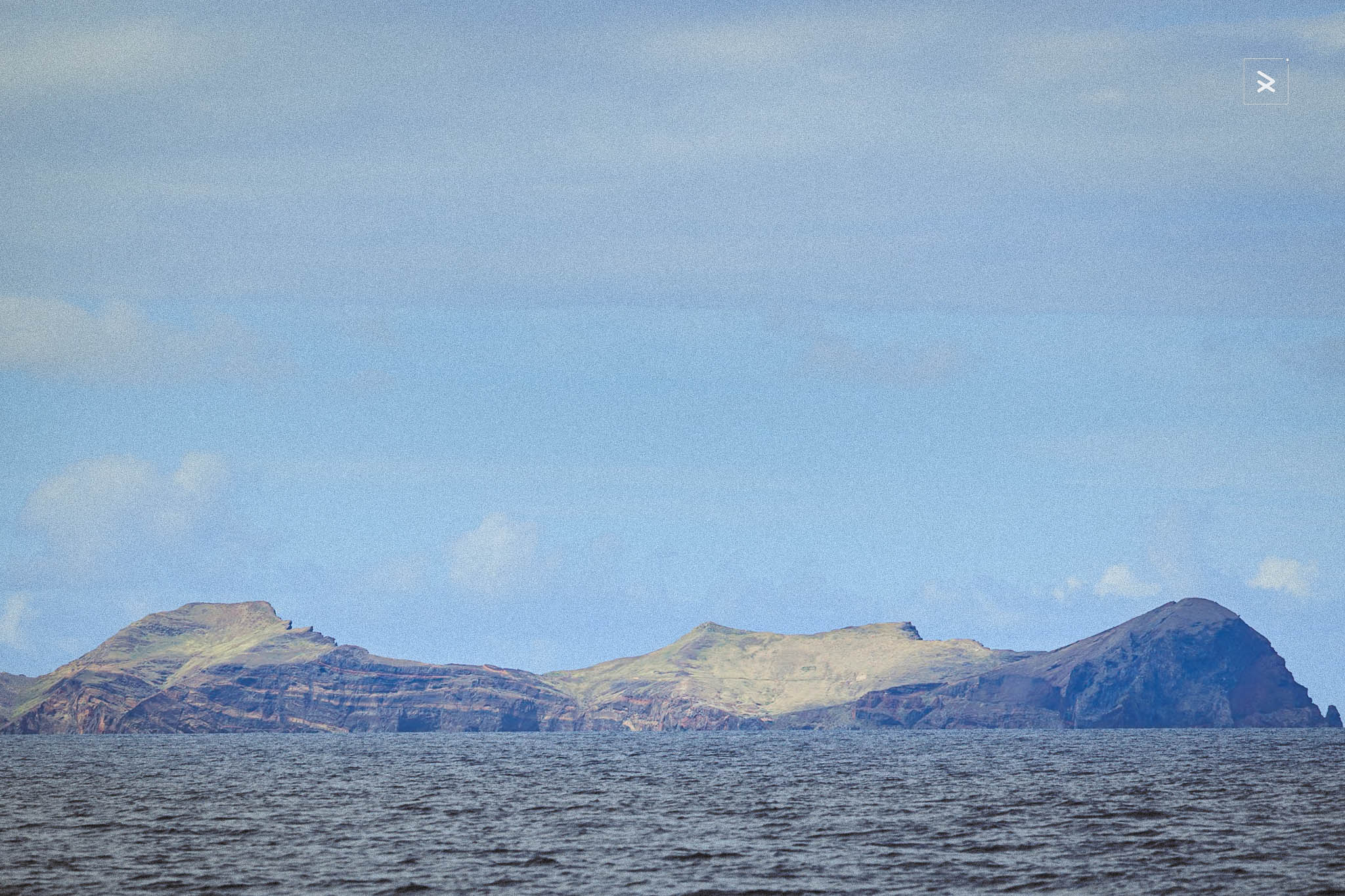
For Print of any photos please reply here with photo link/url.
🚀 Planning Trip, Check 🔻

A quick personal update first –
The Clarity Playbook is now live! 📘
It’s our debut book, a 91-page guide for busy professionals to think better, decide faster, and lead with clarity. Packed with 7 high-leverage frameworks used in global boardrooms, it’s built to help you act with focus today.
Read more here or check online marketplace Amazon US | Amazon UK | Amazon India | Amazon Japan | Google Play Books | Apple Books | Barnes & Noble | Rakuten Kobo | Everand (Scribd) | Smashwords | Thalia (Germany) | Vivlio (France) | Fable | Buy Directly
Other fun stuff
- New prints are available in the shop, check it out.
- Rahul’s Newsletter – Learning & Sharing Concepts Beyond Text Books. The JustDraft is a free newsletter to receive ideas shared with 2400+ people each week directly to your inbox. Join now to start practising change.
- Buy Ready To Use Itineraries – Hand curated travel plans, maps, guides, photo editing presets and many more.
- UK Weekender – Wondering where to go next weekend. Join Weekender and receive travel insights from the UK, epic photography spots every week in your inbox.
Product update/offer
In this section, I share any cool new product, feature released in past few weeks or newsletter subscriber only offers
- 🎁 Luminar Neo Cross-device Perpetual license (Luminar Neo + Luminar Mobile)
- 🎁 [Offer for you] Epidemic Sound introduced Sync to video – Cool feature if you want to quickly make video with great sound collection.

